A plain-English guide to lower-flow living
No jargon and no inflated promises — just how these fittings work and how to pick the right one. Everything here describes the mechanism, not a savings figure.
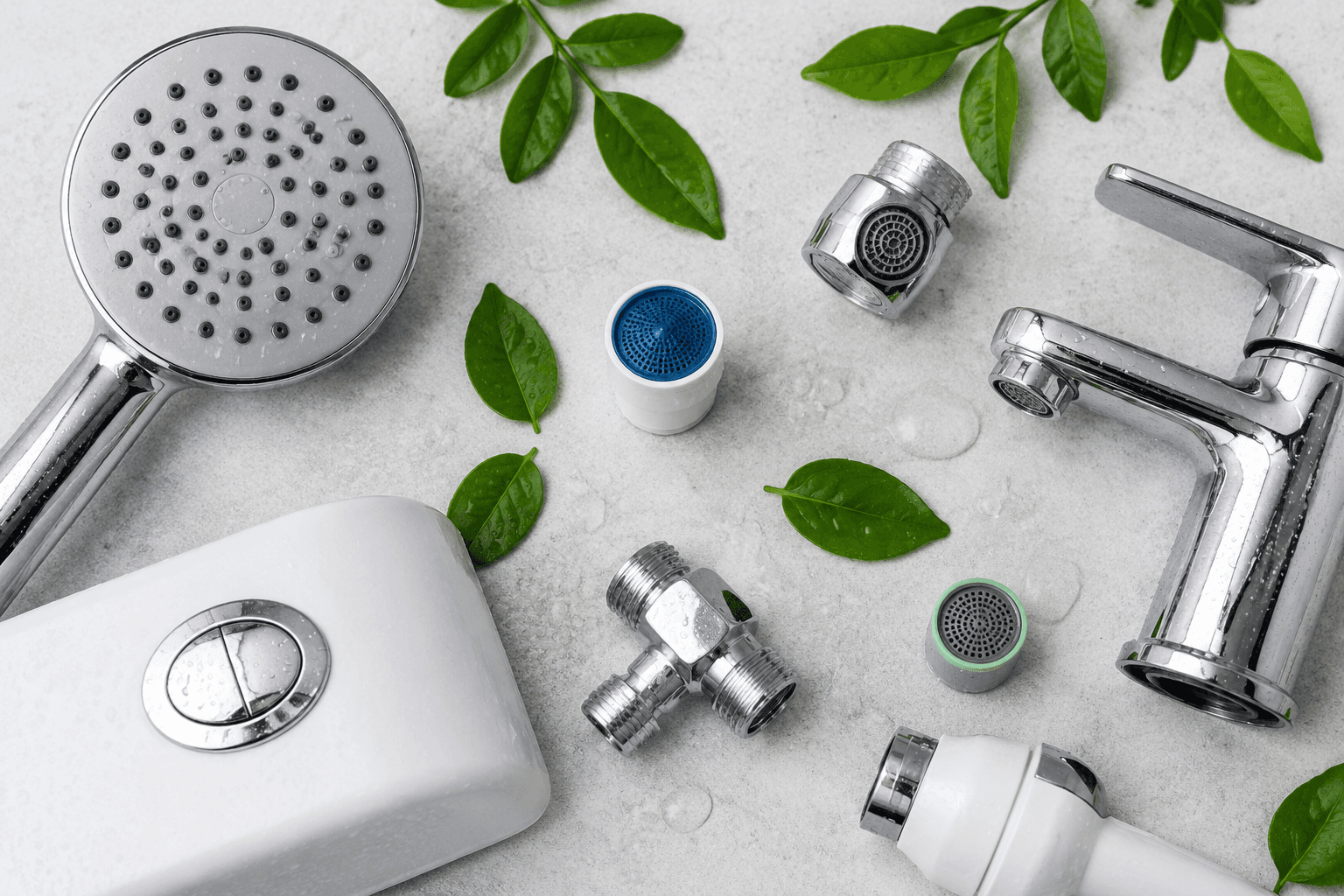
How a lower flow rate still feels full
An aerator is a small screen that mixes air into the water as it leaves the tap. Because the stream is part air, it covers your hands and feels full while a lower volume of water actually passes through. That’s the whole trick — the flow rate at the spout is lower, but the experience barely changes.
Shower heads work the same way, plus they shape and accelerate the spray through fine nozzles so it still feels generous at a reduced flow rate.
Capping the flow rate
Restrictor inserts and reducers are simple washers or connectors that sit inside the fitting. They physically limit the maximum flow rate that can pass through, so an outlet runs at a steadier, lower flow no matter how far it’s opened.
These are ideal where you can’t change the fitting itself but want to bring the flow rate down.
Lowering the volume per flush
Older single-flush cisterns release a fixed volume of water every time. Displacement bags and tank banks take up space inside the cistern, so it draws and releases less water per flush. A dual-flush conversion goes further by giving you a short and a full flush to choose from.
A leak-detection tablet is worth keeping around too — a silent cistern-to-bowl leak can quietly run water day and night until it’s found and fixed.
Check your fitting before you buy
Our fittings are universal-fit for standard threads, but thread sizes vary by region and by tap. Before ordering, unscrew your current aerator or look at your fitting and note whether the thread is on the inside (female) or outside (male), and roughly its size. If in doubt, take a photo and ask us — we’d rather help you get the right part first time.